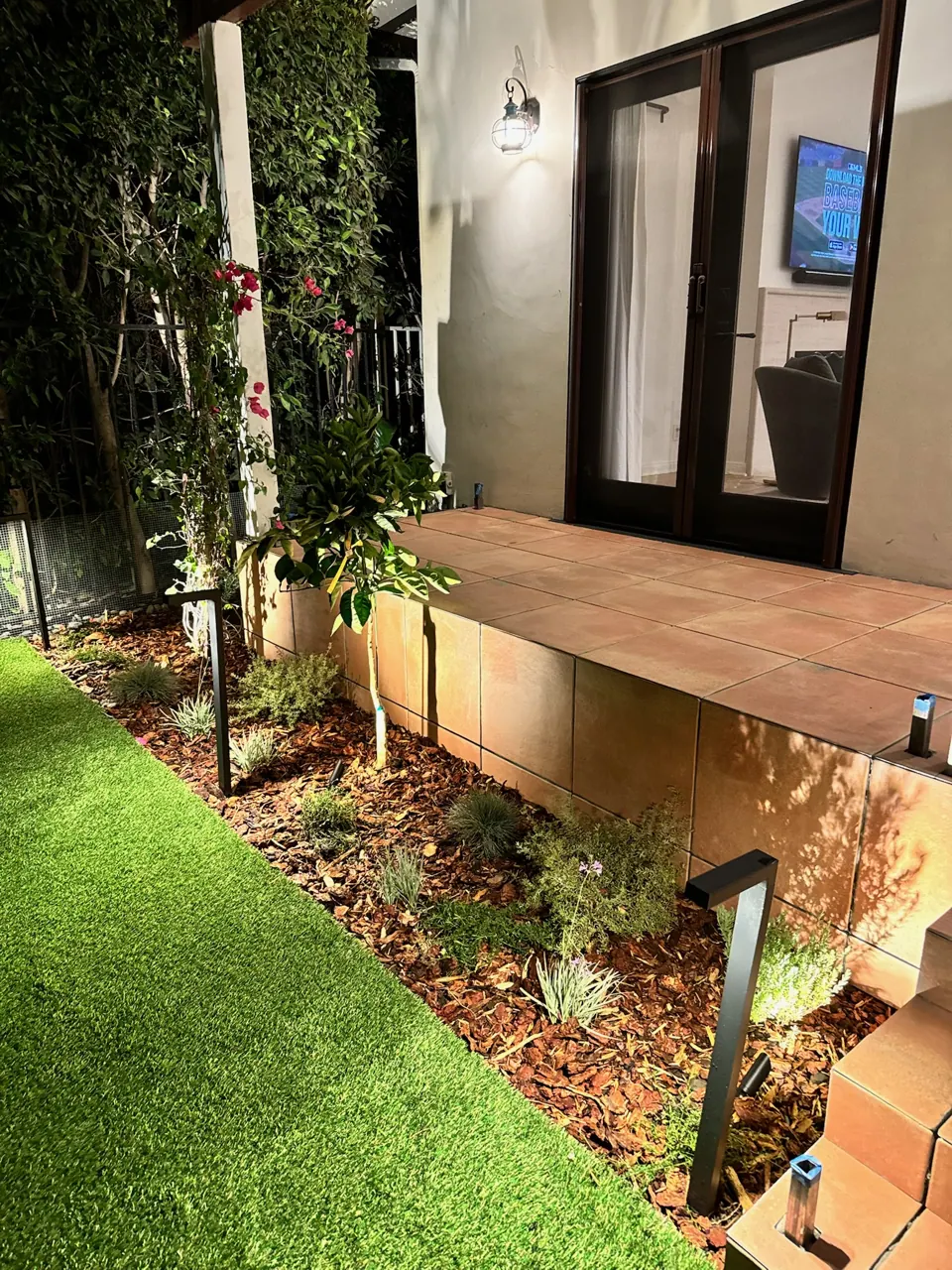
Plan the drainage and the grading first, then build the patio on top. If the ground slopes toward the house, or rain has nowhere to go, water sits by the back door. Over time, the patio can settle.
So before anyone talks about pavers or colors, we ask where your water goes when it rains.
In this guide7
Signs your yard has a drainage problem
Some signs show up only in a storm. Others you can spot on a dry afternoon.
- Puddles that are still there a day after the rain stops
- Water that runs toward the house instead of away from it
- Low spots on the old patio or walkway, often by the back door
- Gutters that overflow, or downspouts that empty at the base of the wall
- Soil and mulch that wash out of the beds or down the slope
- A side yard that stays soggy for days
- Water that comes over from a neighbor's yard, or runs into theirs
- Pavers that have sunk near the house, or a concrete crack with one side higher than the other
If you've seen even one of these, it's worth dealing with before anything new goes on top.
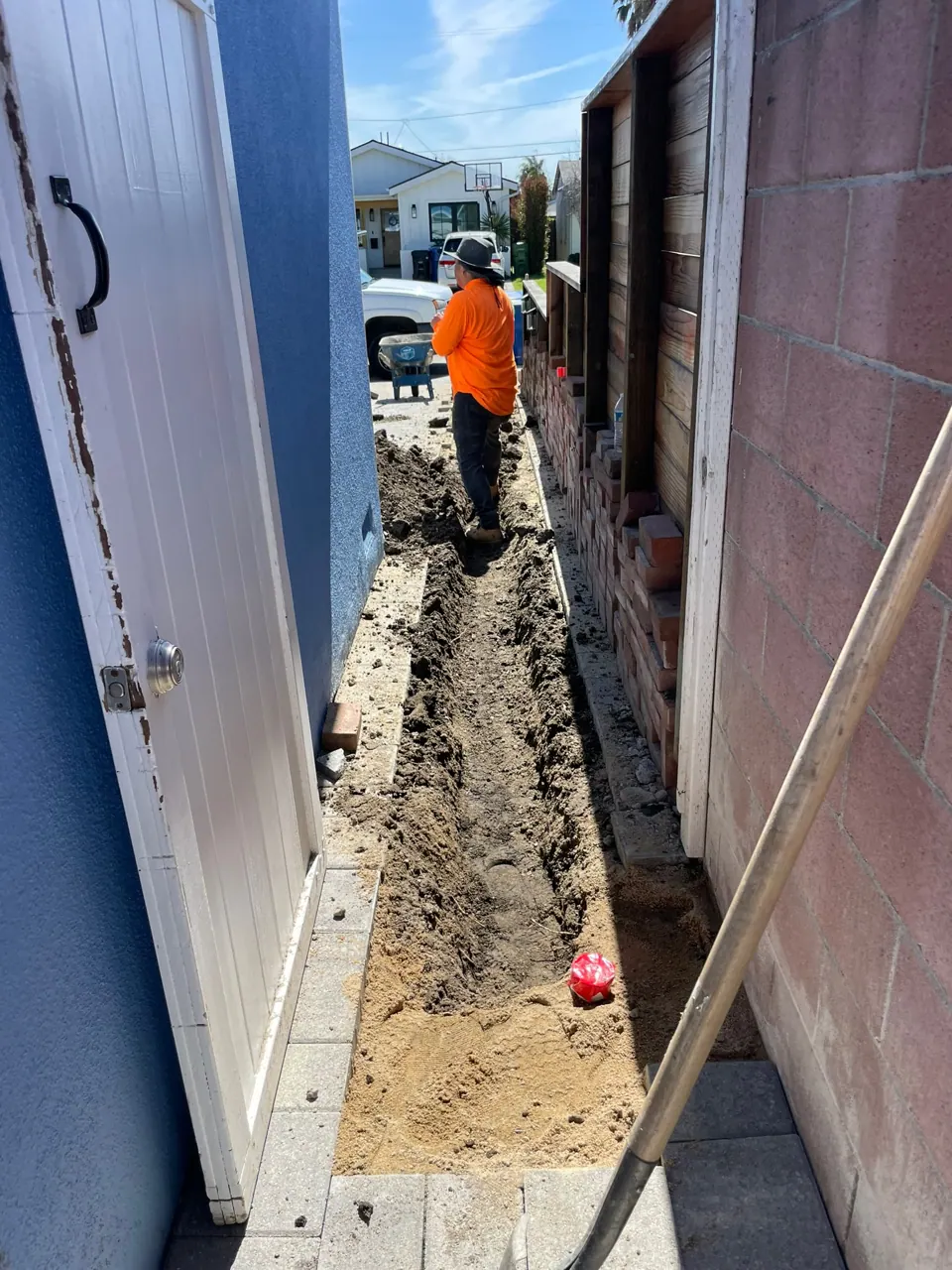
Why a patio fails when drainage is skipped
A patio is only as good as the ground under it. Pavers or concrete sit on a packed gravel base, and the base sits on soil. When water keeps getting under the base, the soil softens and the base can shift. Pavers can sink in the low spots. Concrete can crack, and one side can end up higher than the other.
The slope matters just as much. A new patio usually runs right up to the house. If it tips even a little toward the back door, rain runs toward the wall instead of away from it.
Soil plays a part too. Some clay soils swell when they're wet and shrink as they dry out. These are called expansive soils. They turn up in many parts of Southern California, and a soils report can tell you whether your lot has them. On that kind of clay, keeping water out from under the patio matters even more.
Then there's timing. A drain line under the patio is simple to lay before the base goes in. Adding one later usually means cutting into the new patio.
Where the water is allowed to go
Water always wins. If it has nowhere to go, it sits by the house. So a drainage plan answers two questions: how the water gets away from the house, and where it ends up.
Away from the house
California's residential building code calls for the ground to fall at least 6 inches in the first 10 feet away from the house. Hard surfaces within 10 feet of the house, like a patio, should slope away too. Where a lot line or a wall leaves no room for that, drains or swales (shallow channels in the ground) carry it away instead.
To an outlet it's allowed to reach
The same code sends the water to a storm drain or another approved point of collection that doesn't create a hazard. So a drainage plan should lead to an approved outlet, not onto a neighbor's property. California law expects property owners to act reasonably with surface water, and sending your water onto a neighbor's lot can become a legal problem. The California Supreme Court set that rule of reasonableness in Keys v. Romley (1966). Not legal advice.
At the street, the rules depend on where you live
- In the City of LA, draining to the street through the curb needs a permit from the Bureau of Engineering.
- In the City of LA, LADWP's water conservation rules don't allow sprinkler water to run off into the street. Other water providers set their own rules, so it pays to plan the drainage and the sprinklers together.
- In unincorporated LA County and in other cities, local rules decide what can drain to the street, and some places also review grading or paving that changes how water drains across a lot.
- In the Conejo Valley, Thousand Oaks and Newbury Park follow City of Thousand Oaks rules. Oak Park is in unincorporated Ventura County, so county rules apply there.
Your city's rules decide, and we check them for your address at the site visit and during design. General information, not legal advice. Last reviewed: October 2026
Water always wins. If it has nowhere to go, it sits by the house.
The order of the work
On a backyard project, the work usually goes in this order.
- Drainage and grading. We shape the ground to fall away from the house and lay the drain lines, including any that will run under the new patio. Grading on a hillside can need a permit and a soils report, so we check that for your address before design. Ask early whether your drainage plan needs an engineer.
- Walls. Most of what holds a retaining wall up is out of sight: the footing, the gravel behind it and a path for water to get out. That path ties into the yard's drainage.
- Utilities. Gas, power and water lines go in before the surface, along with empty pipes for anything you may add later, like lights or an outdoor kitchen. The gas, power and water work often needs its own permits and inspections.
- Surfaces. Next comes the patio: the dig, the packed base, the slope and the edges, and last the pavers or the concrete. Artificial grass goes in at this stage too, on a base that drains. Channel drains go into the surface wherever water would collect.
- Planting. Plants and irrigation go in last, so nothing new gets dug up.
Can a French drain go under pavers? A French drain is a gravel trench with a perforated pipe at the bottom. It collects water that soaks into the soil. It can run under a patio, as long as it goes in before the base and leads to an allowed outlet. Puddles on top of the patio are a different problem, and usually come down to slope or a surface drain.
You don't have to do it all at once. If you build in phases, the drainage still goes in first, and the patio can follow when you're ready.

Rainy season is the time to see the water
On a dry day, we read the yard from the slope, the low spots and the downspouts. In a storm, the water shows you where it goes.
If you can, take a short video in the next storm and show it to us at the site visit. Show where the water comes from, where it collects and where it leaves the yard, starting with the downspouts and the back door.
It's usually easiest to dig and plant before the rainy season, and easiest to see the water during it.
A drainage plan can move water away from the house and the places you use. It can't change how much rain falls, and on its own it can't control water coming from higher up the hill or from a neighbor's yard. We'll tell you plainly what a fix can and can't do. The goal is to let the dog out after rain without muddy paws coming back in.
What we check at the site visit
Our lead contractor comes to your home and walks the yard with you. On a patio project with a water problem, we look at:
- Where the water comes from: the roof, a slope, a neighbor or the sprinklers
- How the ground falls away from the house
- Where the water is allowed to go
- What's under the old patio or lawn
- How equipment gets in
Some things we won't know until we measure, and what's under old concrete can change the plan. We explain this at the site visit and in the written proposal.
Related services: French drains Pavers Artificial grass
Common questions
01Who do I call for yard drainage problems?
Start with someone who looks at the whole yard: where the water comes from, how the ground slopes and where the water is allowed to go. A clogged pipe is a plumbing call. Water pooling in the yard or running toward the house is a grading and drainage problem, and that's what our site visit looks at.
02Do landscapers fix drainage problems?
Some do, but drainage is about grading, pipes and an outlet the water is allowed to reach, not just plants. Ask whoever you talk to how they'll handle the grading and where the water will go. Some drainage plans also need an engineer, so ask whether yours does.
Sources
Official pages we used for this guide · 6
Sources
Official pages we used for this guide · 6- California Residential Code R401.3, site drainage, 2025 edition (code mirror)
- Keys v. Romley (1966), California Supreme Court
- City of LA Bureau of Engineering, Class A permits
- City of LA Bureau of Engineering, drainage to the street
- LADWP water conservation rules
- Ventura County General Plan, hazards and safety chapter (expansive soils)
Last reviewed: October 2026