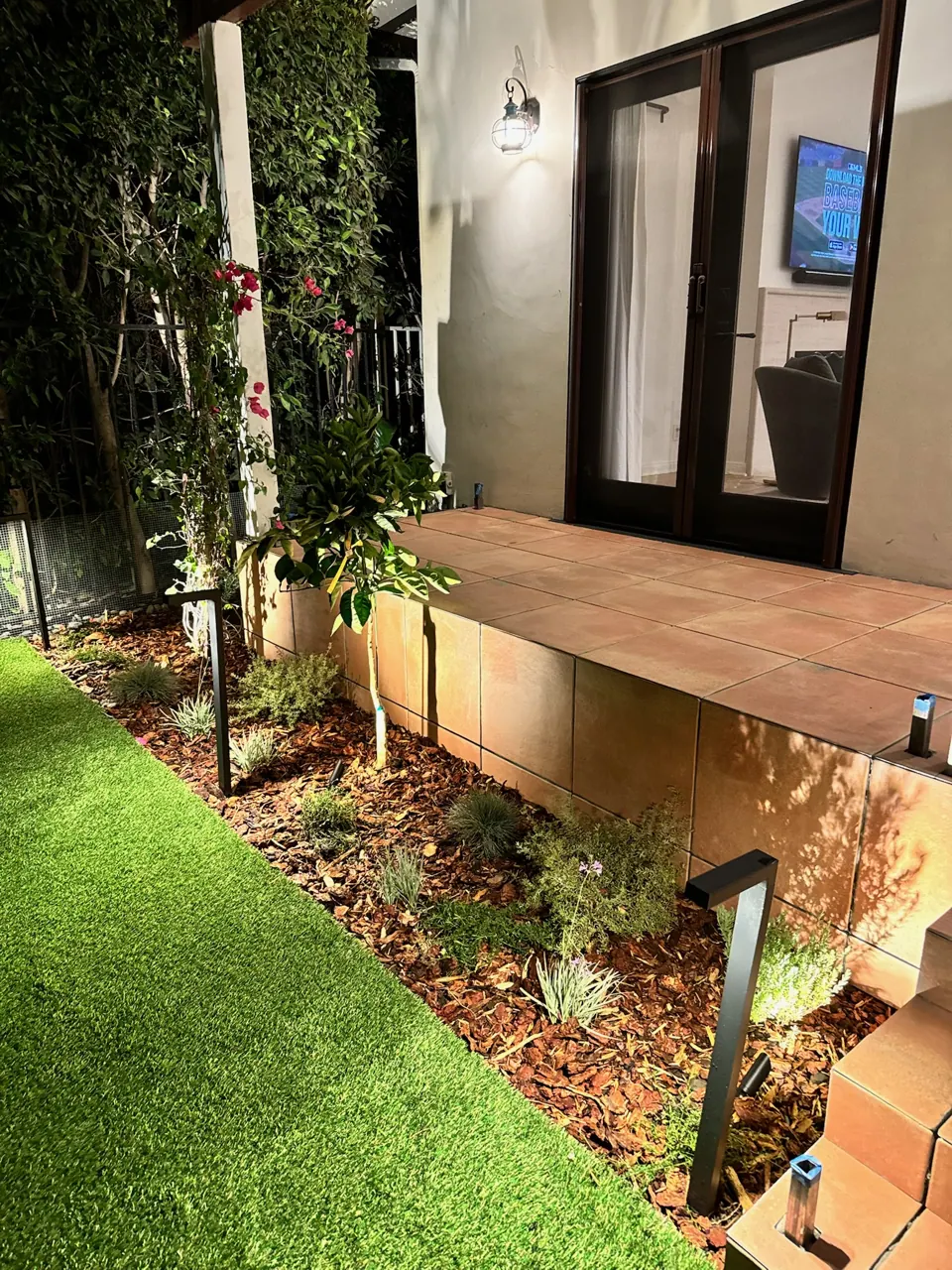
Check the license on the Contractors State License Board website, and look at real work near you. Then compare the site visits and the written proposals. A good visit shows they listen, and a good proposal puts what you talked about in writing.
In this guide9
- 01Check the license, and what it covers
- 02See real work near you
- 03What a good site visit looks like
- 04What the written proposal should include
- 05Who runs the build, and how you'll hear from them
- 06How payments work under California law
- 07Warning signs
- 08Questions to ask before you sign
- 09What we check at the site visit
Check the license, and what it covers
Start with the license. You can look it up by license number on the CSLB website. CSLB is direct about this: seeing a license number doesn't necessarily mean the license is valid. So look at the status, too.
The license record shows:
- Whether the license is active
- The business name, which should match the name on the proposal
- The address of record
- The classifications, which say what kind of work the license covers
- Workers' compensation status
The classification matters. A general building license (class B) is for a project that needs at least two unrelated building trades. When a job is only one trade (framing and carpentry aside), the contractor needs a license in that trade, or has to hire a contractor who holds one. Work like a pool or electrical is done by a contractor licensed in that specialty. CSLB's page on which license fits the job, listed under Sources, explains the classes.
CSLB also suggests asking to see the pocket license, along with a photo ID. If a salesperson comes out instead of the license holder, ask to see their Home Improvement Salesperson registration card.
Ask about insurance, too. In California, a contractor with employees has to carry workers' compensation insurance. General liability insurance isn't required for most license holders, but a home improvement contract has to tell you whether the contractor carries it, along with a notice about workers' compensation. You can also ask for a certificate of insurance.
You can check ours the same way: ACE Design & Build, license #1132942, class B, General Building.
See real work near you
Photos online show a yard on the day it was finished. Seeing one in person, or talking with the people who live with it, tells you more.
Look for work that started with a problem like yours: a slope, water by the house, an old pool or a narrow side yard. A hillside lot needs different know-how than a flat one.
If you talk to past clients, ask what surprised them, good or bad, and whether the work went the way the proposal said. When you read reviews, look past the star count. The ones that tell you the most describe the updates, the cleanup and how problems got fixed.
You can look through our work and read our reviews.
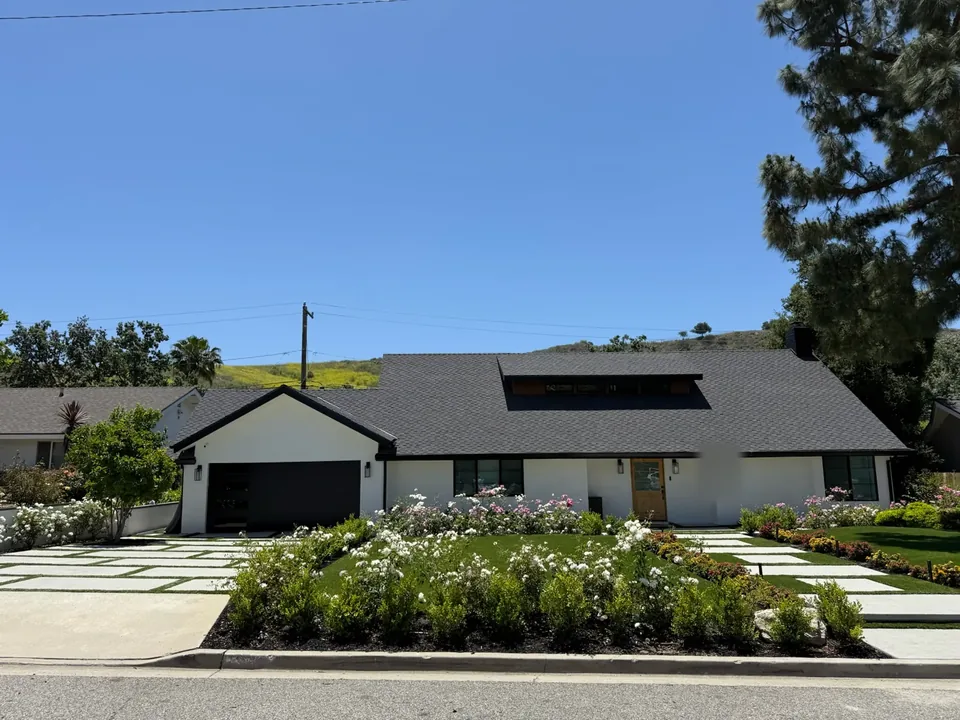
A good visit shows they listen, and a good proposal puts what you talked about in writing.
What a good site visit looks like
Treat the visit as a preview of the job. Did they show up when they said they would? Had they read what you sent them?
A good visit is mostly listening. They ask how you use the yard, what bothers you about it, and what you want it to do: room for the kids and the dog, people over, shade in the afternoon. Then they look at what shapes the plan: the slope, where the water goes after a rain, how equipment gets in, and the sprinklers and utility lines.
They explain what they'd do and why. If part of your list doesn't fit the yard, they say so, and suggest what would work instead.
Be wary of a firm number given before anyone has measured. It can't account for your slope, your soil, your access or what's under the old concrete. The written proposal should come after the visit.
At an ACE visit, our lead contractor walks the yard with you, and we check what can actually be built before anything is drawn. Then we put the plan in a free written proposal.
 Illustration
What the written proposal should include
The proposal is the plan in writing. When you compare proposals, check that each one lists:
- The work, area by area: patio, walls, drainage, planting and so on
- What's included, and what isn't
- What could change it, like what's under old concrete or what your city asks for
- How changes get approved once work starts
- How payments are tied to work that's finished
A line like "backyard remodel as discussed" is hard to compare, and hard to check the finished work against. If two proposals list different work, ask why.
Our written proposal is free, and you can hold it to this same list. For a closer look, read What a written backyard proposal should include.
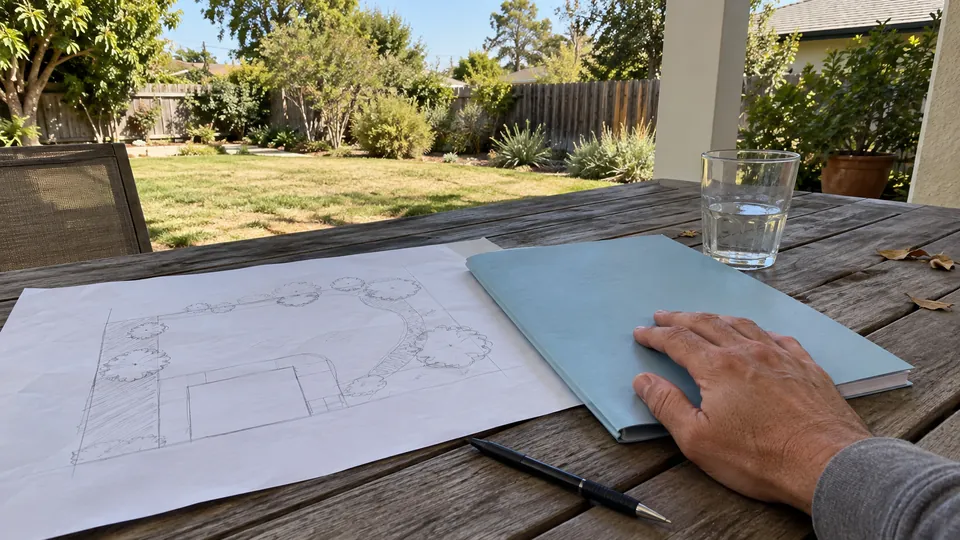
Who runs the build, and how you'll hear from them
In reviews of backyard projects around LA, many of the worst stories are about how the job was run, not the work itself: calls nobody returned, a crew that didn't know the plan, a homeowner left to manage it all.
So ask:
- Who runs the job day to day?
- Does the person who walked your yard stay involved once work starts?
- How often will you hear from them, and how: text, email or a call?
- Who do you call when something comes up?
Ask who does each part of the work, too. Under California law, a home improvement contract has to say whether subcontractors will be used. If they will, you can ask for a list with their names, contact details, license numbers and classifications.
At ACE, our own crews build your project, and they're covered by workers' compensation insurance. Pool shells and electrical work are done by licensed specialty contractors, under the same ACE contract. Ask us, as you'd ask anyone, who those companies are and what their license numbers are.
How payments work under California law
Most backyard work counts as home improvement under California law. That includes pools, spas, patios, landscaping, fences and driveways.
In most cases, California law limits the down payment on a home improvement contract, and after that, payments can't get ahead of the work that's done or the materials delivered. The CSLB consumer guide explains the figures, so we don't repeat them here. It's worth reading before you sign anything.
A change to the contract has to be in writing and signed before that work starts. If you sign a home improvement contract at home, California law generally gives you three business days to cancel. It's five business days if you're 65 or older, and seven for repairs after a declared disaster. The contract has to include the cancellation notice. Rules can change, so read the notice in your own contract. General information, not legal advice.
Our site visit and written proposal are free. Before you sign any contract, ours included, read the payment schedule and the cancellation notice.
Warning signs
None of these proves anything on its own. Each one is worth a question before you go any further.
- Pressure to sign at the visit, or a price that's only good if you sign today
- A request for payment that runs ahead of the work
- No written proposal, or one that doesn't list the work
- A license number you can't find on CSLB, or a business name that doesn't match
- No license number on the ad, the truck, the business card or the bid
- Cash only, with no paperwork
Questions to ask before you sign
Bring these to every visit, and compare the answers side by side:
- What's your license number, and which classification covers this work?
- Who runs the job day to day, and how will I hear from you?
- Will other companies do part of the work? Can I see their license numbers?
- Who gets the permits, and from which office?
- How do changes get written up and approved?
- How are payments tied to finished work?
- What hours will the crew work, and which days will be loud or need the driveway?
- What happens at the end, and who do I call if something needs attention later?
About question 4: the license comes from the state, but permits come from the city or county your address falls under. That could be the City of LA, LA County for unincorporated areas like Altadena, or a separate city like Pasadena, Burbank or Glendale. In the Conejo Valley, Thousand Oaks and Newbury Park go through the City of Thousand Oaks, and Oak Park goes through Ventura County. Allowed construction hours differ from city to city, too, which is why question 7 is on the list. Your city's rules decide, and we check them for your address.
What we check at the site visit
Our lead contractor comes to your home and walks the yard with you. We look at:
- How you use the yard and what bothers you about it
- The slope, drainage, access and utilities
- What can actually be built before anything is drawn
- What your written proposal will cover
How we work: How the work gets done · Reviews · Our work
Sources
Official pages we used for this guide · 14
Sources
Official pages we used for this guide · 14- CSLB License Check
- CSLB: tips for hiring and checking a license
- CSLB: which license fits the job
- CSLB licensing classifications
- CSLB: before you hire for a pool
- CSLB Ten Tips card (PDF)
- CSLB home improvement contracts consumer guide (PDF)
- California Business and Professions Code 7057
- California Business and Professions Code 7151
- California Business and Professions Code 7159
- California Business and Professions Code 7159.5
- California Civil Code 1689.5, who counts as a senior
- California Civil Code 1689.6
- LA County Code Title 12, noise and construction hours
Last reviewed: October 2026