Hardscape and patios in Los Angeles, built from the base up

A patio is only as good as the ground under it. We plan the base and the drainage before anyone picks a color.

Call (310) 596-5266

Free site visit from our lead contractor, for homes in LA County and the Conejo Valley. Where we work

Start here

Tell us about the patio

Our lead contractor walks the yard with you, listens, and checks the ground, the slope, the drainage and how the crew gets in. Then you get a written proposal for your project.

Free site visit and written proposal for homes in Los Angeles County and the Conejo Valley. Where we work
What are you planning?

Your proposal lists the work area by area, what's included, and what could change it. What the proposal covers

Where it starts

Where patio projects usually start

Find the one that sounds like your yard. Each one leads to the work that usually answers it.

Before: an old stained concrete slab behind a blue house with French doors
After, the same blue house: a gray paver patio along a red block wall, with new steps at the French doors

The old slab, stained and cracked

The same yard, finished in pavers

Drag to compare

  1. 01Old concrete that's cracked or sinkingA slab that's 40 years old and showing it.Concrete →
  2. 02A dead lawn that should be a patioA place to sit instead of a place to water.Pavers →
  3. 03A pool deck that's cracking or hotThe deck takes more sun and water than any surface in the yard.Outdoor tile →
  4. 04Room to hostSpace for the table, the grill and the people around them.Pavers →
  5. 05Paths and stepsGetting from the house to the yard, or up a slope, without a muddy shortcut.Pavers →
  6. 06A kitchen island or fire pit that needs a finishTile on the parts of the yard people gather around.Outdoor tile →

01Patios and walkways

Pavers

Paver patios, walkways and pool decks on a packed base, sloped so water moves away from the house.

When people call us about pavers

  • Pavers that have sunk or shifted
  • Sand washing out of the joints
  • Weeds coming through
  • Edges that have spread

What's under a paver patio

Sunk or shifted pavers are usually the base or the edges, not the pavers.

  1. 01Pavers, set tight in the pattern you choose
  2. 02Joint sand that locks them together
  3. 03A thin, level bed of sand
  4. 04A gravel base, packed in layers
  5. 05An edge restraint that keeps them from spreading
  6. 06A slope that moves water away from the house

Types of pavers, and the tradeoffs

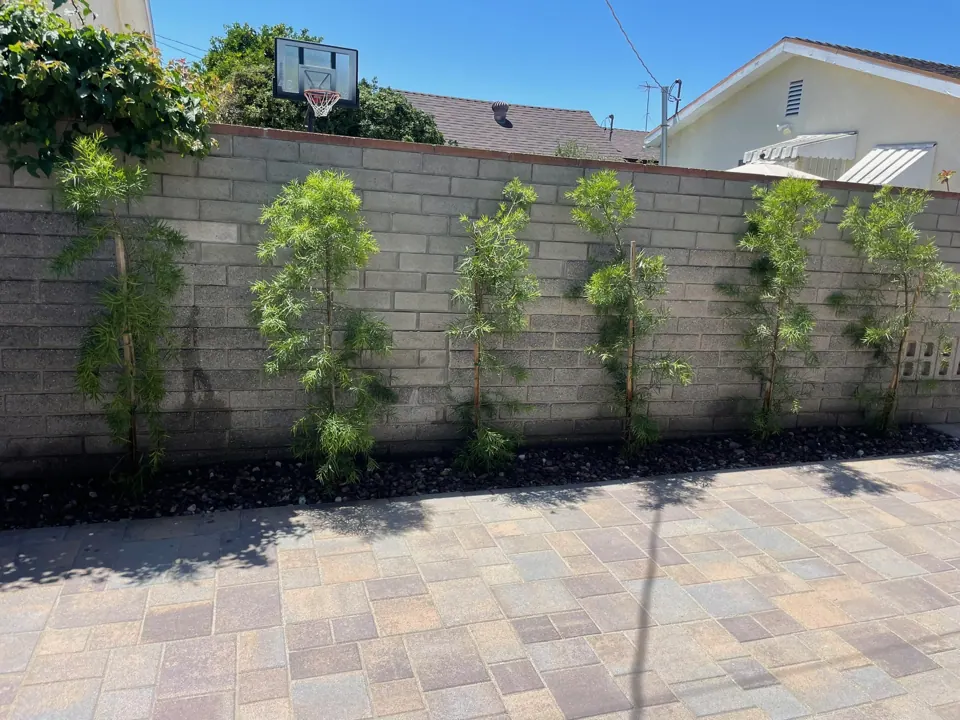
  1. A patio of multi-size concrete pavers along a block wall with young trees01
    Concrete pavers

    Many shapes and colors. A single piece can be lifted and reset if something underneath needs work.

  2. Large pale porcelain pavers on a gravel base outside a sliding door, with one spot not set yet and a level on the gravelIllustration02
    Porcelain pavers

    Thin, flat and hard to stain. They need a firm, even base, and smooth ones can be slick when wet.

  3. An irregular natural flagstone path curving between low-water planting03
    Natural stone

    Every piece is different. Some softer stones wear or stain, so we talk through where they'll go.

  4. Large concrete slabs set in gravel, with open joints that let rain soak in04
    Permeable pavers

    Open joints let rain soak in. They need a deeper base, and they can be part of a lawn replacement project.

Try a pattern

Tap a pattern to see it on a patio plan. We settle the pattern with you during design.

A gray paver side path laid in a running bond pattern, leading to a wooden gateIllustration
Running bond
Light gray plank pavers laid in herringbone at the edge of a step
Herringbone
A red and tan paver patio laid in a basketweave pattern outside a sliding door, with a small table and chairsIllustration
Basketweave

Several sizes laid together, framed by a border course.

02One continuous surface

Concrete and stamped concrete

Patios, walkways and pool decks poured over a prepared base, with joints and slope planned so water runs off.

When people call us about concrete

  • A bigger patio in one surface
  • A path to the side gate
  • A pool deck with more grip

Finishes, and the tradeoffs

  1. A new broom-finish concrete slab with tooled control joints01
    Broom finish

    Simple and grippy. Plain to look at.

  2. A terracotta-colored concrete patio with saw-cut joints and two steps down from a stucco houseIllustration02
    Color

    Mixed in or added on top. Sun can fade some colors.

  3. A stamped concrete walkway with a stone-look pattern and border, beside artificial turf03
    Stamped

    Patterned to look like stone or brick. Needs resealing on a schedule, and it can be slick when wet.

  4. An exposed aggregate pool deck with small rounded stones at the surface, wet near the pool edgeIllustration04
    Exposed aggregate

    Small stones show at the surface. Good grip near a pool.

How a concrete patio goes in

  1. 01

    The base and the slope come first, the same as any patio.

  2. 02

    Forms go in to hold the edges and the height.

  3. 03

    The pour, then the finish.

  4. 04

    Joints are cut so cracks follow them.

  5. 05

    It cures. Stamped concrete gets sealed.

03The finish layer

Outdoor tile

The finish layer on steps, outdoor kitchens and pool decks, set on a base built for outdoor weather.

When people call us about outdoor tile

  • Steps and landings that need a clean finish
  • Tile on an outdoor kitchen island
  • A pool deck with a finish that grips
  • Old tile that's cracked or coming loose

Two ways to set it

  1. Large pale porcelain pavers on a gravel base outside a sliding door, with one spot not set yet and a level on the gravelIllustrationA
    Porcelain pavers on a gravel base

    Flat, hard to stain, and easy to lift for repairs.

  2. Terracotta tile on a front porch and its steps, lit at nightB
    Porcelain or tile on a concrete slab

    Very clean lines. The slab underneath has to be sound.

Old tile that's cracked or coming loose is often a sign of the slab or the base under it, so we look there first.

Options, and the tradeoffs

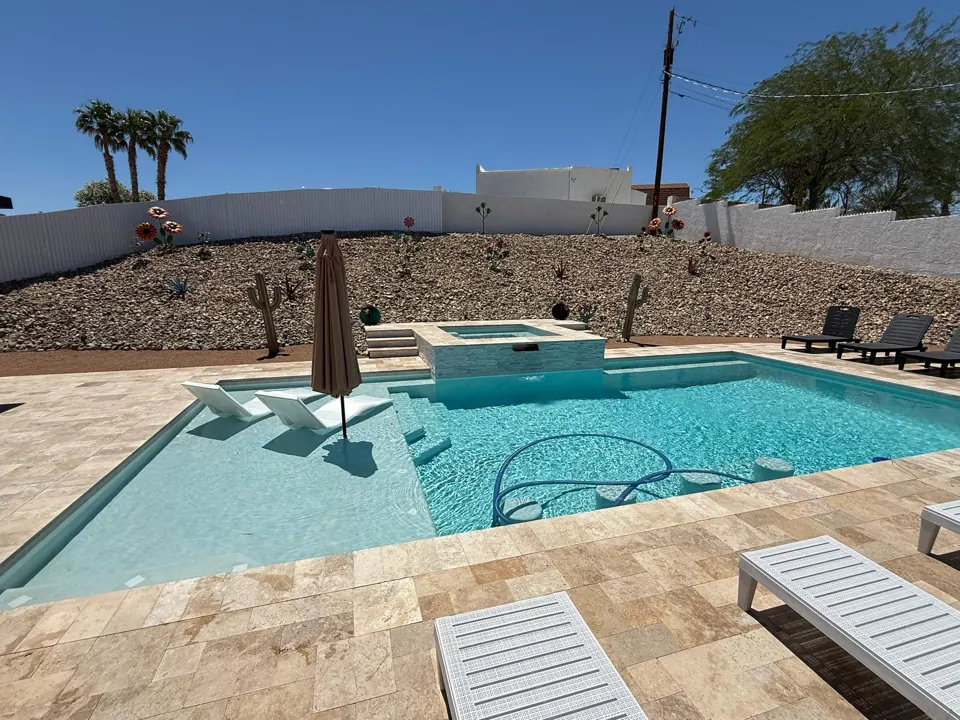
  • A travertine-look pool deck around a rectangular pool with a raised spa
    Near the pool

    We choose a textured finish for grip.

  • Grout joints

    Outdoors, they move with heat and cold, so the joints are planned for it.

How outdoor tile goes in

  1. 01

    We check what's underneath first: a sound slab, or a packed gravel base for porcelain pavers.

  2. 02

    The surface is prepared and leveled.

  3. 03

    Where water could get in, a membrane goes under the tile.

  4. 04

    The tile is set, with movement joints where the surface needs to flex.

  5. 05

    Grout, and sealing where the material needs it.

Side by side

Pavers, concrete or tile?

The three, compared with each other. More dots means more of it.

Gray paver patio with turf strips between the pavers, outside a white house01
PaversRead more →
Grip when wetMost have a textured face
Easy to repairLift and reset a piece
Easy upkeepJoint sand gets topped up
Best spotPatios, paths and pool decks
A concrete walkway of poured step pads through a front lawn to the door02
ConcreteRead more →
Grip when wetBroom grips, stamped less
Easy to repairA section is cut out
Easy upkeepStamped gets resealed
Best spotOne surface across a big patio
A terracotta tile porch and steps along the front of a house, above new turf03
Outdoor tileRead more →
Grip when wetPick a textured finish
Easy to repairSpare tiles help
Easy upkeepHard to stain
Best spotSteps, islands and pool decks

Your finish, color and spot change the answer. We go through it with you at the site visit.

Under the surface

Hardscape that drains

Most of the work on a patio happens before the first paver goes in. Here's what that work is.

06 / 06
  1. 01

    Dig out to the right depth.

    The old surface comes out, and the soil is dug to the depth the base needs.
  2. 02

    Lay and pack the base in layers.

    Gravel goes in a few inches at a time, and each layer is packed before the next.
  3. 03

    Slope it away from the house.

    The base is shaped so rain runs away from the walls, not toward them.
  4. 04

    Set edges that keep the pavers from spreading.

    A restraint along the open sides holds the whole surface in place.
  5. 05

    Fill and lock the joints.

    Joint sand is swept in and settled, so the pavers move as one surface.
  6. 06

    Add drains where the water collects.

    Where the slope ends at a low spot, a drain carries the water away.

Pick the color last. The ground under it decides how long it looks new.

Screeding the sand base along the fence before the pavers go down.
After the work

What's normal, and what's worth a call

A new patio changes a little in its first months. Here's how to tell the normal from the reason to call us.

Normal

  • Slight color differences between batches

  • A white haze that fades

  • Joint sand settling in the first months

  • Hairline cracks along concrete control joints

Part of a new surface settling in. No call needed.

Worth a call

  • Pieces that rock

  • Low spots that hold water

  • Edges that spread

  • A crack with one side higher than the other

(310) 596-5266

If you see one of these, call or text us.

In the whole yard

Where the patio fits in the yard

Drainage and walls come first. Footings for a kitchen or a patio cover, and the conduit for lights, go in before the surface.

  1. 01Drainage
  2. 02Walls
  3. 03Footings and conduit
  4. 04The patio surfaceThen the surface
Local rules

Permits and local rules for patios

The rules change by city and by parcel. These are the ones we check before design.

01

Slope

Building code calls for the ground to fall at least 6 inches in the first 10 feet away from the house. We slope patios and walkways so water moves away from the house.

02

Permits

A patio at ground level often doesn't need a building permit. A raised patio, steps, or anything with a cover can. We check what applies at your address.

03

Lawn rebates

Patios that let rainwater soak in can be part of a lawn replacement rebate project. Check the official rebate rules before any grass comes out.

04

Coastal and historic

In the Coastal Zone and in historic districts, some backyard work needs extra review and some doesn't. We check your parcel first.

05

Surface heat

Surfaces in full sun get hot, and darker ones get hotter. In the Valley, that matters more than at the beach. We choose colors and finishes with that in mind.

We confirm what applies to your property at the site visit and during design.

General information, not legal advice.

Last reviewed: October 2026.

One project

Who does the work

Patio work is often part of a larger backyard plan, which one ACE team designs, manages and builds. Any part that needs a specialty license is done by a licensed specialist, scheduled and supervised by our team, under one ACE contract.

The layout, the base and the drainage are drawn as one plan, so the patio and the ground under it are planned together.

Two installers laying a paver patio.
The proposal and the build

Your proposal and how the build runs

  1. What the proposal covers

    Your proposal lists the work area by area, what's included, and what could change it.

  2. Who runs the build

    One ACE team runs the project, and our own crews build it. You'll know who to call.

  3. Your yard while we work

    Before we start, we agree on work hours, the gate the crew uses and how pets stay safe.

  4. After we finish

    Before we call the job done, we walk the yard with you. If a question comes up later, call or text us.

What clients say about patio projects

5-star reviews on Google
Ace Design & Build completely transformed our backyard in Brentwood. We had them install new pavers, update the landscaping and plants, and rework the entire outdoor space. The difference is incredible, it went from outdated to a beautiful extension of our home. ... We love the finished space and have been spending so much more time outside.
Aleeza H.Brentwood · 2026G
They installed turf and pavers in my backyard, and the entire project was completed quickly and professionally. The crew kept the work area clean throughout the process, and the quality of the finished product exceeded my expectations.
Edgar N.Los Angeles · 2026G
... to completely redo our backyard in Studio City, and the result exceeded our expectations. The new pavers and artificial turf changed the whole look of the space, and the drip irrigation was a great addition for keeping everything low maintenance. ... I still can't believe how beautiful it looks now.
Eve H.Studio City · 2026G
Questions

Questions about patios and hardscape

01Pavers or concrete?

Both work. Pavers come in more shapes and colors, and a single piece can be lifted and reset if something underneath needs work. Concrete is one continuous surface with fewer joints, and it can be colored or stamped, but repairs show. The base and the slope matter more than the choice between them.

02Is it slippery near the pool?

It can be. Smooth surfaces, some sealers and polished stone get slick when wet. Textured pavers, broom-finished or exposed-aggregate concrete, and textured porcelain give more grip. We choose the finish near the water with that in mind.

03Will it get hot?

Surfaces in full sun get hot, and darker ones get hotter. In the Valley, that matters more than at the beach. Lighter colors, texture and shade help. For pool decks and play areas, we talk it through before choosing.

04Do I need a permit for a patio?

A patio at ground level often doesn't need a building permit. A raised patio, steps, or anything with a cover can. It depends on the height and on your city, so we check.

05What's normal after a patio goes in, and what's worth a call?

Normal: slight color differences between batches, a white haze that fades, joint sand settling in the first months, and hairline cracks along concrete control joints. Worth a call: pieces that rock, low spots that hold water, edges that spread, or a crack with one side higher than the other.

06Can you put pavers over my old concrete?

Sometimes. It depends on the condition of the slab, the height at doors and steps, and where the water will go. Often the old concrete comes out, so the new base can be built right. We look at it at the visit.

07Will pavers settle or shift?

Pavers settle when the base under them isn't deep enough or packed well, or when water gets under them. That's why most of the work happens before the first paver goes in: the dig, the base, the packing, the slope and the edges. Joint sand also settles a little in the first months, which is normal.

08Will my concrete crack?

Concrete does crack, and that's normal. Joints are cut so most cracks follow them. A good base, the right slope and joints in the right places keep cracks small. A crack with one side higher than the other is worth a call.

09What's the downside of stamped concrete?

It needs resealing on a schedule to keep its color, it can be slick when wet, and repairs are hard to match. In return, you get the look of stone or brick in one continuous surface.

10What goes under porcelain pavers?

Either a packed gravel base, like other pavers, or a concrete slab with the porcelain set on top. Some are set on pedestals over a flat surface. The right choice depends on where it goes and what's there now. We check at the visit.

All questions →

Start with a free site visit

Free site visit and written proposal for homes in Los Angeles County and the Conejo Valley. Where we work

What are you planning?

Call (310) 596-5266Text us
A new tile porch and steps with path lights at night

After you ask

  1. 01We call or text to set a time
  2. 02Our lead contractor walks the yard with you
  3. 03You get a written proposal
CA License #1132942 · Check on CSLB

Licensed in California

ACE Design & Build

License #1132942 (Class B, General Building). Check it on the CSLB website.

5-star reviews on Google

What you can check before we meet

Insured. Workers' compensation insurance for our crews.

Who does the work. One ACE team designs and manages your project, and our own crews build it. Any work that needs a specialty license, like a pool shell or electrical, is done by a licensed specialist, scheduled and supervised by our team, under one ACE contract. How the work gets done

Written contracts. The CSLB consumer guide explains what a California home improvement contract should include. We go over ours with you before you sign.

Call